

Social commerce trends are reshaping how people discover and buy products, and if your business isn’t paying attention, you’re leaving revenue on the table. The line between social media and online shopping has effectively disappeared. People aren’t just scrolling for entertainment anymore, they’re browsing, comparing, and purchasing without ever leaving their favorite platforms.
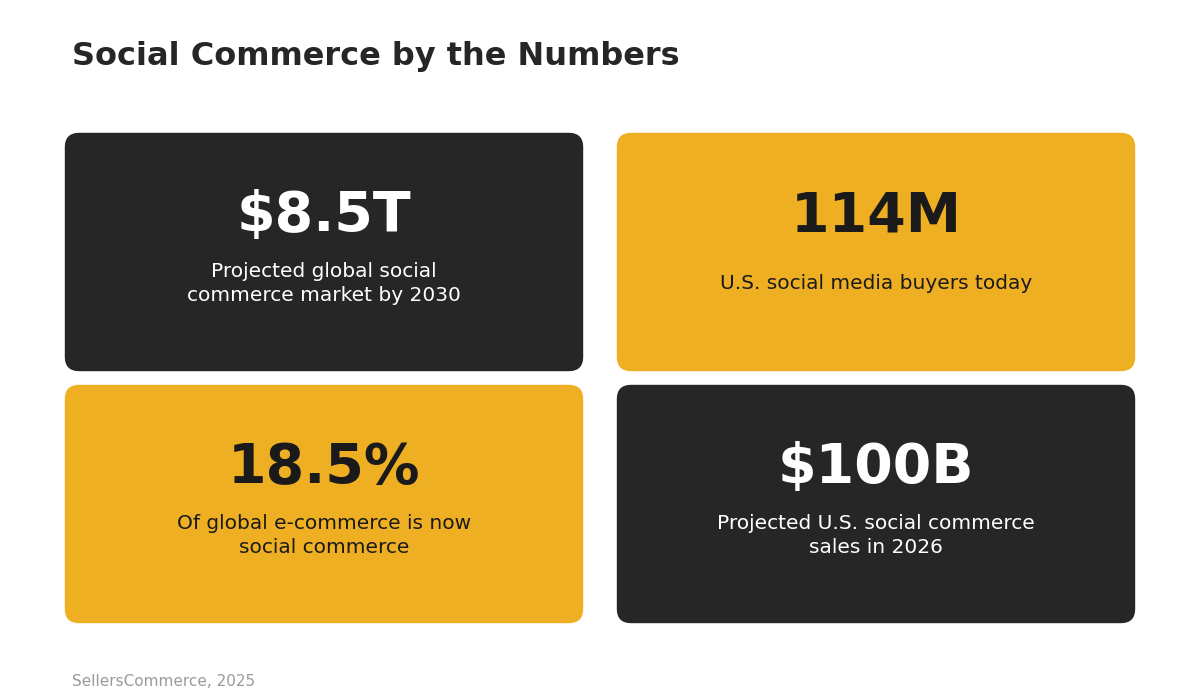
The numbers are hard to ignore. According to SellersCommerce, the global social commerce market is valued at approximately $2 trillion in 2025 and is expected to reach $8.5 trillion by 2030. In the United States alone, there are over 114 million social media buyers, and social commerce already accounts for roughly 18.5 percent of global e-commerce. Whether you’re a product-based brand or a service provider, understanding these trends is essential to staying competitive in a market that’s evolving at breakneck speed.
Key Elements Driving Social Commerce: Live Shopping, AR, and Seamless Checkout
Several converging forces are making social commerce more powerful than ever. Livestream shopping, augmented reality try-ons, and frictionless in-app checkout are transforming the way consumers interact with brands on social platforms.
Livestream Shopping Goes Mainstream
Livestream shopping has moved well beyond its origins in Asia and is now gaining serious traction in Western markets. Brands and creators host real-time video sessions where they demonstrate products, answer questions, and offer exclusive deals, all while viewers can purchase with a single tap. It combines the urgency of a flash sale with the personal touch of a one-on-one consultation. Approximately 45 percent of social commerce platforms are now integrating live-streaming features, and that number is climbing fast.
Augmented Reality Removes the Guesswork
One of the biggest barriers to purchasing online has always been uncertainty, will this lipstick shade work for me? Will that couch fit in my living room? Augmented reality is closing that gap. AR-powered try-ons and virtual placement tools let consumers visualize products in their own environment before committing to a purchase. Brands using these features are seeing lower return rates and higher customer confidence, which translates directly to improved conversion rates.
Platform-Specific Opportunities: Where to Focus Your Efforts
Not all social commerce platforms are created equal, and the right strategy depends on where your audience spends their time and how they prefer to shop.
TikTok Shop has emerged as a major force, with over 70 million people in the U.S. using the platform for purchasing. The combination of short-form video discovery and in-app checkout creates a seamless path from inspiration to purchase. Instagram Shopping continues to be a strong player, particularly for fashion, beauty, and lifestyle brands, with its visual-first format lending itself naturally to product discovery. And Facebook still commands the largest social commerce buyer base in the U.S., with nearly 70 million shoppers expected to use the platform for purchases.
Influencer Integration: How Creators Drive Social Sales
Creators and influencers have become the sales engine of social commerce. Their ability to build trust with audiences and authentically showcase products makes them incredibly effective at driving conversions. Affiliate links, branded content, and creator-led storefronts have turned influencers into micro-retailers with direct revenue impact.
The most successful brands are moving beyond one-off sponsored posts and building long-term partnerships with creators who genuinely believe in their products. These ongoing relationships produce more consistent content, deeper audience trust, and stronger return on investment over time.
Building Trust for Purchase: Authenticity and Social Proof
Trust is the currency of social commerce. Consumers are more cautious when buying through social media than they are on established e-commerce platforms, which means brands need to work harder to earn confidence. Research shows that 78 percent of consumers worldwide cite the lack of buyer protection and refunds as their biggest worry about social shopping. User-generated content, customer reviews, and transparent product information all play critical roles in overcoming that hesitation.
Social Proof Converts Browsers into Buyers
When a potential customer sees real people using and recommending a product, it carries far more weight than any branded advertisement. Encourage your customers to share photos and reviews, feature user-generated content prominently in your social storefronts, and respond to questions and feedback openly. Peer-driven recommendations now influence the purchasing decisions of nearly 60 percent of social shoppers, making social proof one of the most valuable tools in your commerce toolkit.
Clear Policies and Communication Build Confidence
Beyond social proof, practical trust signals matter just as much. Clearly communicate your return policy, shipping timelines, and customer service contact information on every social storefront. Respond to customer inquiries quickly and publicly, other potential buyers are watching how you handle questions and concerns. Brands that treat transparency as a competitive advantage consistently outperform those that leave customers guessing about what happens after they click “buy.”
The Future of Social Commerce: What’s Next
Social commerce is only going to become more integrated into everyday shopping habits. Expect to see more sophisticated AI-powered product recommendations within social feeds, expanded digital wallet integration for even faster checkout, and deeper convergence between content creation and commerce. The brands that succeed will be the ones that treat social platforms not as an afterthought but as a core sales channel, investing in the content, tools, and partnerships needed to meet customers where they’re already spending their time.
Social commerce sales in the U.S. are projected to surpass $100 billion in 2026, and with the average spend per social buyer continuing to climb, the opportunity for businesses of all sizes is substantial. The companies that start building their social commerce infrastructure now, optimizing their storefronts, testing livestream formats, and cultivating creator partnerships, will be the ones best positioned to capture that growth.
Navigate Social Commerce with May Media
Social commerce is transforming the way consumers shop, and businesses that adapt now will have a significant advantage in the years ahead. From choosing the right platforms to building creator partnerships and optimizing for seamless checkout, there’s a lot to consider, but you don’t have to figure it out alone.
At May Media, we help businesses build social commerce strategies that drive real sales. If you’re ready to turn your social media presence into a revenue channel, schedule a discovery call today and let’s get started.